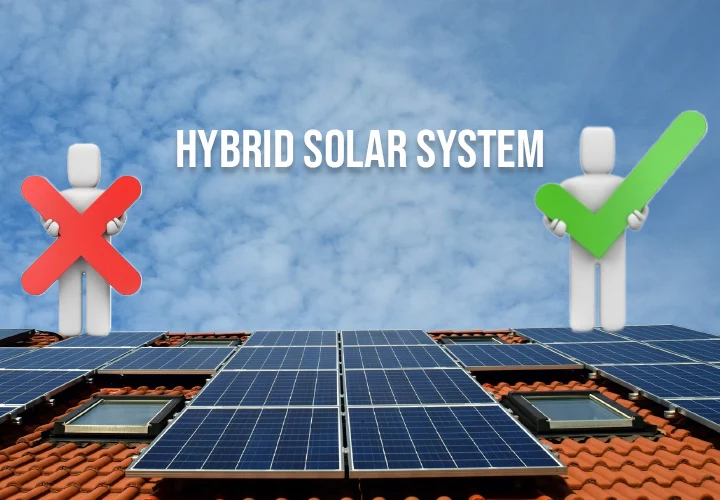
When considering solar solutions for your home, most homeowners choose between on-grid and off-grid solar power systems. These systems are the best for your home if you live in an area with regular sunshine. However, the hybrid solar system is your best friend if you live in hilly or stormy regions with frequent blackouts. The hybrid system stores all the excess power produced in a battery, which can be used later at night or as needed. A hybrid solar system stays connected to the grid and is backed by battery storage. The inverter attached converts direct current from the sun to alternating current to illuminate your home with electricity. Here’s a list of the advantages and disadvantages of the hybrid topology to help you make an informed decision:
Hybrid solar systems combine renewable sources like solar and wind with traditional power, offering improved efficiency, reliability, and cost savings while reducing environmental impact.
Rooftop Solar hybrid systems are known for their ability to provide continuous power. The excess power stored in the battery can be used as an inverter during power outages. Moreover, in case you need more power than is stored in the battery, you can remain connected to the grid for seamless switching.
The hybrid system is an economical choice as it utilises solar energy efficiently. With the availability of a battery backup, you can utilise the sun’s power to the fullest.
Even though the initial cost of installing solar panels might be high, it is overall beneficial in the long run. In addition, it has minimal maintenance and no constant fuel bill to be paid.
The hybrid solar system is your one-stop shop for all efficiency needs. The system saves excess power generated in the attached battery and wastes no fuel.
Be it a refrigerator or a reading light, our hybrid solar system can intelligently distribute the energy supply according to the requirements of the device.
Hybrid solar systems combine solar panels, battery storage, and grid backup to provide continuous electricity, even during outages, while optimising solar energy for nighttime use and reducing peak demand. Long-term benefits from reduced grid dependence, smart energy use, and lesser maintenance frequently offset the initial investment, despite greater upfront costs. Modern systems also contain smart inverters that intelligently transition between power sources, increasing efficiency and eliminating waste.
Every system has its bugs; here are some of the disadvantages of the hybrid solar system:
As the hybrid system uses different sources of power, the controls for its settings can be complicated. It is best to contact a leading solar installation company like us so that our engineers can assist you better.
As mentioned previously, the initial installation cost of the solar system can run high, even though little management is required down the line.
Due to harsh exterior conditions, home batteries often have a shorter life span. Our proficient team can help you install the battery in a place where it will not be exposed to the weather to give an optimal output.
As the Rooftop Solar hybrid system is designed specifically for your home, the number of devices that can be connected to the system is limited. It varies from system to system and can be upscaled with our services if required. With customizable features and battery assistance, our Rooftop Solar hybrid system is perfect for homes that never stop shining. Switch to a sustainable future with KCP Solar.
Considering a hybrid solar system? It’s essential to weigh both the advantages and disadvantages to make an informed decision. Hybrid systems offer benefits like uninterrupted power supply, efficient use of renewable energy, and intelligent load management. However, they also come with challenges, such as complex power control and higher installation costs. Understanding these factors can help you determine if a hybrid solar system aligns with your energy needs and budget.
Connect with us